

Red Dirt and Blue Notes in the Gothic South of Sinners
SLM Elston Howard/LMGI helps bring the Mississippi Delta
to Louisiana in Ryan Coogler’s Vampire Horror Sensation
by Shaun O’Banion
Set in the Jim Crow South of the early 1930s, director Ryan Coogler’s break-out hit Sinners transforms the landscape of the rural Mississippi Delta into a vampire hellscape—only it wasn’t shot in Mississippi at all.
SLM Elston Howard/LMGI braved the alligators, snakes and overgrown grass weed of Louisiana to help Coogler ground the tale of twin brothers, both played by Michael B. Jordan, who return from Chicago to reclaim their family’s sawmill by reimagining it as a juke joint.
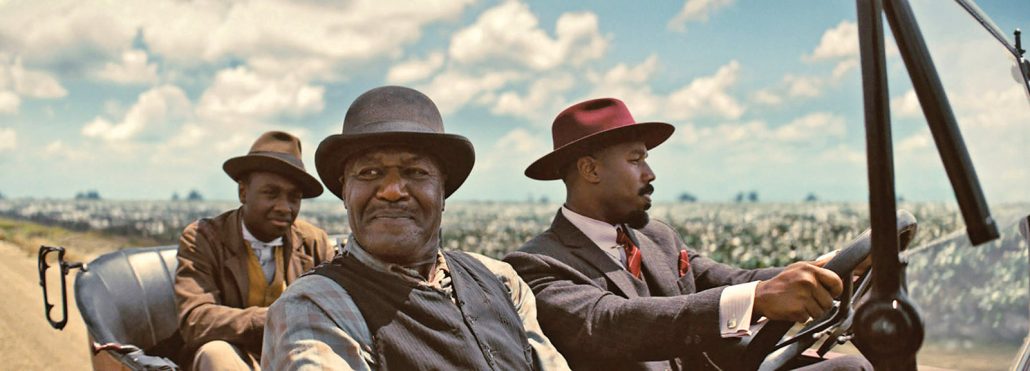
L-R: Miles Caton, Delroy Lindo, Michael B. Jordan driving through the “cotton fields” on the set of Sinners. Photo courtesy of Warner Bros. Pictures
Dirt roads, swampy backwaters and weathered timber buildings become the visual and emotional backdrop for a tale of survival, resilience and cultural expression, amplifying the historical weight of segregation and the hope embodied in the music and social gatherings of the era.
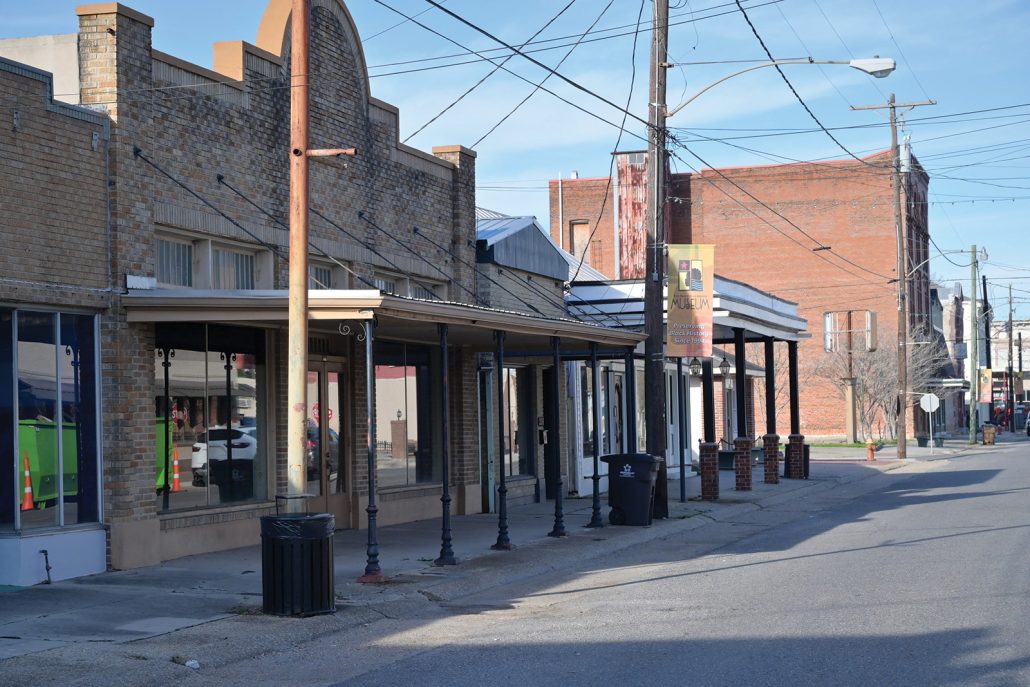
Before: Donaldsonville, Louisianna, standing in for Clarksdale, Mississippi
But when supernatural forces arrive under the guise of itinerant musicians, that sense of place turns haunting, transforming the Juke Joint from a place of refuge for the community into a battleground—underscoring how locations, like the characters in Sinners, carry both promise and peril.
Director Coogler, best known for Black Panther and Creed, draws on his signature blend of social realism and genre storytelling, staging these conflicts in striking, atmospheric environments: candlelit interiors, smokey dance floors and shadow-draped woodlands.
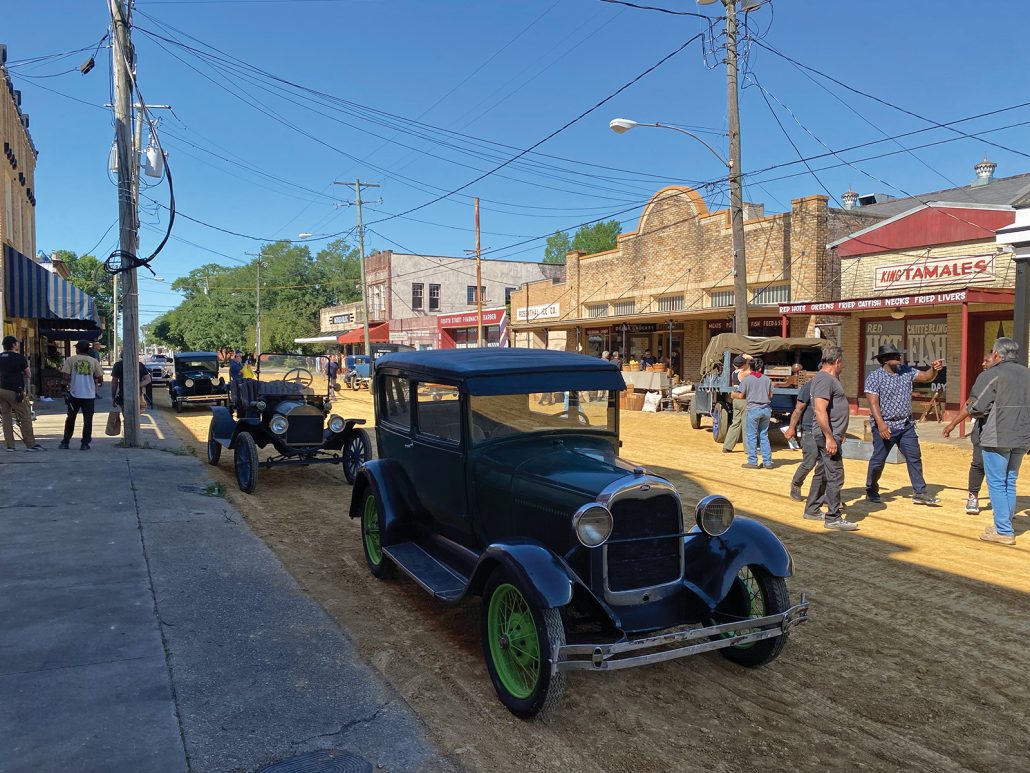
A “dressed” Donaldsonville. Both photos are courtesy of Elston Howard/LMGI
The result is a film where location and story are inseparable, with every setting echoing the themes of trauma, resistance and the enduring power of music. To make it all work, the team needed a supervising location manager who would understand the subtext of the material and be able to elevate the story’s Southern Gothic horror milieu into something epic and unforgettable.
Production designer Hannah Beachler, perhaps best known for her Oscar-winning work on Black Panther, had worked with Howard twice before, and when she reunited with Coogler for her fifth collaboration with him—along with his producing partners, Zinzi Coogler and Sev Ohanian—for their new feature Sinners, there wasn’t any question of who she wanted to lead the Location Department.
Howard, one of the most sought-after SLMs in the business with the professional accolades to prove it, including membership in the Academy of Motion Picture Arts and Sciences and a 2024 LMGI Award nomination for his work as the New Orleans LM for SLM Bill Doyle/LMGI on David Fincher’s The Killer, laughs at how he joined Sinners.
“Hannah basically called me up and said, ‘you’re doing this film with me!’”
Ohanian says that bringing Howard onto the team was an easy choice. “Hannah knew she wanted to work with him, so there was that … but we always do a quick vetting, and he just had such a great reputation that there wasn’t really any question that he was going to be a good fit for us.”
Howard took a deep dive into the script, but it wasn’t what he was expecting at first. “I had done my share of vampire movies down here and as I’m reading, I’m just kind of visualizing everything and at a certain point you’re like, ‘I thought this was a vampire movie. Where are the vampires?’”
But as he kept reading, the tone swept over him, and he got caught up. “I think it’s a masterful script,” he says. Howard admits that his two favorite types of projects are action films and period films, and this had elements of both. “I like taking a place back in time … or the details of arranging to have gunfire or blow up a car in the middle of downtown New Orleans,” he says. “I just like the adrenaline of it.”
Lucky Breaks
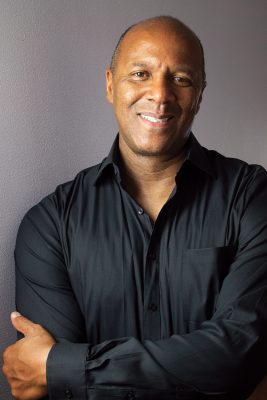
SLM Elston Howard/LMGI. Photo courtesy of Elston Howard/LMGI
Elston Howard was born and raised in Louisiana’s Lower Ninth Ward which runs along the New Orleans Canal connecting the Mississippi River and Lake Pontchartrain. The largest of the city’s districts, it is perhaps known best as the public-facing epicenter of the 2005 Hurricane Katrina disaster.
Both of Howard’s parents were educators—his father was a school principal, and his mother taught first grade for 30 years.
Howard attended Dillard University where he earned his bachelor’s in business and computer science, degrees that helped him land a job at the local Fox affiliate in 1988.
“The station was actually owned by legendary music and film producer Quincy Jones,” Howard says, “so you can imagine it was not the Fox we know today. Back then it was about The 700 Club, In Living Color or The Simpsons.”
He spent four years at the station, putting his computer programming skills to work.
“At that time, in the master control department, you had to manually input all of the data to insert the commercials into segments of a movie or TV program. And so, I would program the in and out times for the commercials, whether they were 15- or 30-second spots,” he recalls.
Howard was making decent money, so he decided to move to a place right near the French Quarter. A chance encounter with then ALM Gary Huckabay would change the course of his life forever. Huckabay, who lived in Howard’s building, was in prep on the Warner Bros. film JFK, and he helped get Howard onto the New Orleans team.
“I had always wanted to break into the film industry,” says Howard, “but back in those days it was really luck or fate in terms of how you could get in.”
Meeting Huckabay was fate presenting opportunity. Even if his parents were … less than thrilled.
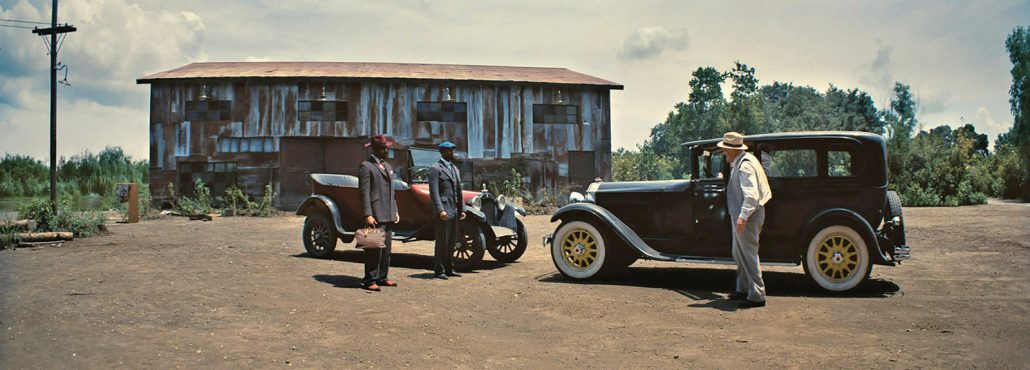
The completed Juke Joint set. Photo courtesy of Warner Bros. Pictures
“You know, their structure in life was stability; take care of the family. But I remember my mom was supportive. My dad though, didn’t really understand how I could leave a well-paying job with healthcare and whatnot for a job that, in 20 weeks, would just be over. He was like, ‘It’s fantastic you’re moving up to films, but, what’re you gonna do next?’” It was a fair question.
But Howard felt that he was still young and figured he may not get this opportunity again. In a bold and maybe even crazy move, he quit the job and started on the movie a week before principal photography.
The film’s star, Kevin Costner, took a liking to Howard and, as they neared the end of production, Costner asked him what he was planning to do next. Despite his father’s concerns, Howard hadn’t really given it much thought. Costner advised him, recalls Howard, that what he needed to do was to get on a project from beginning to end in order to understand the whole process.
And with that, Costner presented him with an opportunity to move out to L.A. to work with the AD department on his next picture, The Bodyguard.
Howard jumped at the opportunity. And Costner even made sure he was traveled with the production to Miami for that portion of the shoot!
When the project wrapped, Howard was longing for home, so he returned to New Orleans just at the start of the Louisiana gold rush for film and TV production. He quickly found himself working as an ALM on films like The Pelican Brief, and Interview with the Vampire. Before long, he fast-tracked his way to his first location manager job, and he knew he’d found his place.
“I loved it immediately,” Howard says. “I’m a people person, you know, I love to talk. And I kind of immediately understood the logistics in terms of what the job required. We’re like the main artery for every department—there isn’t anything that happens that doesn’t swing by us. And I think, over the years, what gets asked of us has gotten more and more complicated.”
Just four years after that first job on JFK in 1996, Howard was managing his first TV series, The Big Easy. The show lasted just two seasons, but he was off and running in the business and quickly became the man to know if you wanted to shoot in Louisiana.
That’s how he first met production designer Hannah Beachler.
Two Dogs with a Bone
It was 2008 and Beachler and Howard were working on Ruffian, a period feature set in the ’70s that was shooting in Shreveport.
“When I met him,” recalls Hannah, “we just hit it off right away.”
The two developed a shorthand with one another that reflected the value of their friendship.
As both of their careers ascended, they kept in touch and whenever Beachler got to work in the region, she knew she could count on Elston.
“It was just easy with him, you know?” Beachler says. “And because he knew the area so well and because I had been there for a while, I could turn to him and go, ‘we need a blah blah blah,’ or ‘I wanna go down to Lou’s place,’ or ‘you know that spot back on the Pomes property by the fence where they did that thing? That’s the spot.’ And then he’ll present other things.
“But I’m like a dog with a bone. And I’ll be like, ‘that’s the spot, get me that.’”
She says with Howard, there’s never any question about whether he’ll find the right place or manage to secure a location.
“He’s also a dog with a bone,” she says, “and he’d push until we got whatever we needed. We were already behind the eight ball when we started Sinners, so we had to jump in right away which is where that shorthand with Elston comes in handy.”
Blues-Infused Scouting
At the start, shooting in Mississippi, or even Georgia, was briefly considered by the filmmakers, but even before Howard came aboard, it had been decided to film in Louisianna.
“A few weeks before the shoot there are hundreds of people in the office, but in those early days it was really just Ryan, Hannah and Elston scouting,” recalls Ohanian.
On the first day Howard, Coogler, director of photography Autumn Durald Arkapaw and others from the team all hopped in an SUV and drove about 55 minutes out of New Orleans to Thibodaux, Louisiana.
“We were looking for the cotton field vibe. The plantation vibe,” Howard says. “Thibodaux is on the plantation belt and is known for the Laurel Valley Plantation that still has sharecropper cabins sitting on it.
“On the drive out, Ryan connected his Bluetooth to the car, and I realized that he’s a music guy—rhythm and blues. And he was playing music to get the energy of the scenes and what we were looking at,” says Howard. “That’s when I realized that this movie was already shot in his mind and I felt the pressure immediately.
“That music was Ryan’s mental preparation for scouting, and it went on for weeks and weeks and weeks. We never listened to the radio or random music. It was just music he was planning for the film, and it put you right into it.”
For Beachler, it was simple. “Our process, Elston’s and mine, has always been: ‘What does the director need to tell this story?’ That was how we approached it with Ryan, so we push and put the gas pedal down until we find it.”
As scouting continued, Howard began to fill out his team, enlisting scout Jimmy Trotter and key ALM Deven Schruff Howard … who also happens to be his wife—a fact the Howards like to keep under wraps during work hours. In fact, one producer from a past project, who shall go unnamed, had worked with the couple for two years and never knew they were together!
Thibodaux seemed the ideal place to look for their cotton fields as sugar cane would eventually be planted there.
“Cotton grows in the south, but in Louisiana, it’s more of a northern crop. And it gets harvested in the fall. We would be shooting in the spring and summer. Cane gets planted in early summer to also harvest in the winter, but we managed to work it out,” says Howard with a sly smile.
So, all the “cotton fields” seen in the film were actually cane fields with more 60,000 Hibiscus plants—and the cotton, from real cotton plants, was tied into each one by hand. They ended up shooting about a third of the movie in Thibodaux.
Martian Soil
One of the biggest challenges for the location team throughout the shoot was replicating the terrain of Clarksdale, Mississippi, in Louisiana.
“Even though it’s the south, our soil is very different,” Howard says. “They’re known for red dirt and it’s a very pliable dirt. The most important thing to Ryan was wherever we shot in Louisiana, whether it was at Laurel Valley Plantation or the train depot, we had to have that red dirt. Not a lot of directors would care about that level of detail, but Ryan does. It mattered to him. It mattered literally from the ground up.”
Getting that dirt meant that they would have to source it, then truck it in and lay it down—a task that fell to Lead Greensman Scott Bovina. But it wasn’t that simple.
“You don’t just pin-roll it and make it flat. Things back in those days had texture,” Howard explains. “You know, most period piece movies, they’ll lay dirt down and I’ve had production designers that wanted to use horse manure to give it texture. People don’t realize that, back in those days, nobody’s shoes were clean.”
That dirt may seem to be an unusual expense for a film but having it made a huge difference on the film in Howard’s view. “When you see it on camera, it just radiates. It’s almost like you’re looking at the surface of Mars,” he says.
The problem with trucking in the dirt is that, as soon as it rains, it all just turns to mud, and Sinners shot 75%-80% exteriors. The team knew two things for sure: “It was gonna be hot and it was gonna be rainy,” says Howard.
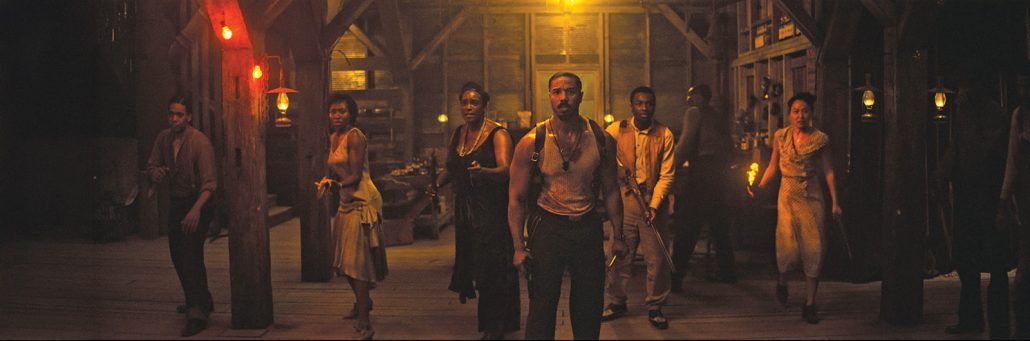
Showdown at the Juke Joint. Photo courtesy of Warner Bros. Pictures
Throughout production, the cast and crew faced temperatures in excess of 100° and up to 90% humidity with severely rainy weather!
“The elements were a huge complication on this shoot,” adds Ohanian. “And we quickly realized were going to have to do a lot of shifting the schedule around because you’d come into set and all of the red dirt would have turned to mud.”
Interestingly, simply bringing in another truckload of dirt wasn’t always an immediate fix. “If you brought in more dirt,” says Ohanian, “and just dropped it on top of the wet soil, it would soak into the mud—and that’s if it wasn’t just going to keep raining—so it wasn’t about just dealing with rain days in the schedule, you had to reconfigure at least two days after the rain to let it dry out.”
The good thing about letting it dry out is that, when it did, it hardened like cement leaving any tire ruts from carriages and period cars behind.
“It made it that much more authentic,” says Beachler, and this was true wherever we laid down fresh soil, which included the Farmhouse set, Downtown Clarksdale, the Church set, Sammie’s House and The Train Depot.
“It was on all of us to find ways to keep the cameras rolling and go shoot something else,” Ohanian adds. “Often we would ask Hannah and her team to build us cover sets which they would manage to do in record time, but this movie was one where every day we would all come in looking at the weather apps on our phones just to be sure what we could shoot.”
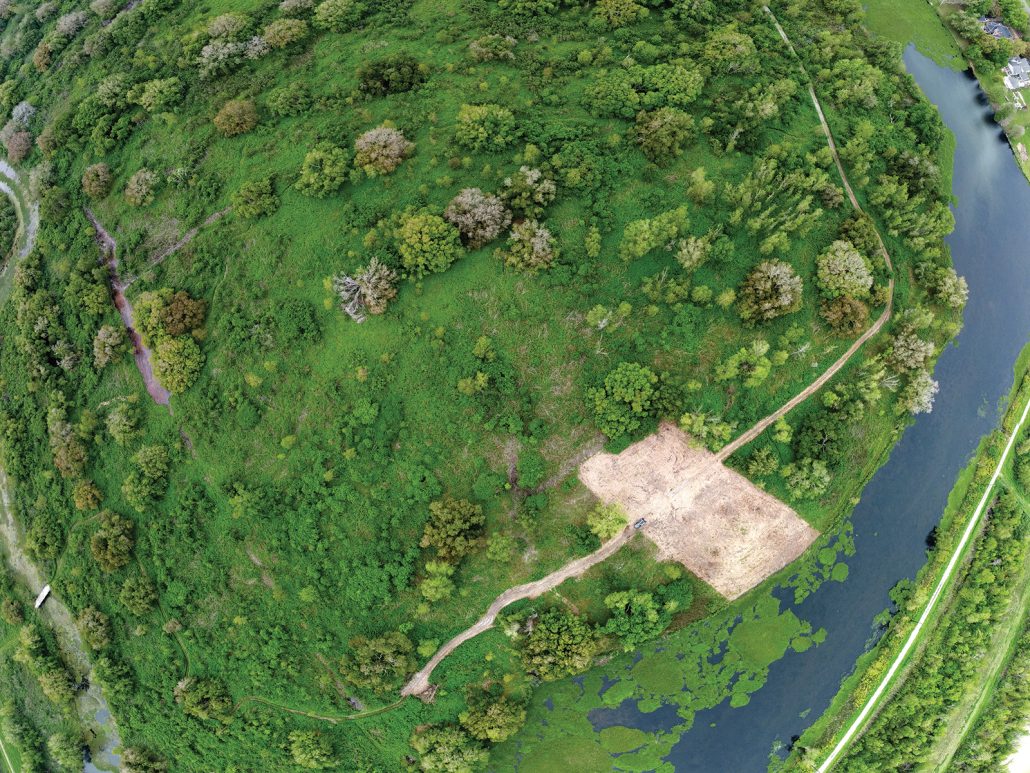
Juke Joint set location after brush clearing.
Photo courtesy of Elston Howard/LMGI
The Juke Joint
By far, the most pivotal location in the film is the Juke Joint, an old sawmill the brothers take over from some less than savory characters.
There were three key elements that Coogler wanted for the Juke Joint: He wanted it to feel completely isolated, slightly abandoned, and most importantly there needed to be a small body of water, like a bayou, directly behind the sawmill.
Early in the process, the team decided it would be a full build. But where to build it was the question.
“We looked and looked and looked,” says Beachler. “And eventually, I changed the design a bit to fit the types of locations Elston was showing us, which is sometimes more beneficial in the end. The problem with putting something that big on a waterway was that we couldn’t find a place that was isolated enough.”
That’s when Howard had an out-of-the-box idea. He was scouring Google maps with his scout, Jimmy Trotter, looking at satellite views and it suddenly just hit them.
“Right there in Lower St. Bernard Parish, adjacent to Orleans Parish, there’s an abandoned golf course called Braithwaite Park Golf Course, and it’s been abandoned since Katrina,” Howard says. “So, imagine 18 holes of a golf course after all these years. The 200-year-old oak trees are there. It has ponds because those are the obstructions that you have on a golf course, right? I knew it would work.”
Beachler, meanwhile, was back at the office waiting for a miracle. “And so, one day Elston comes bouncing in the office and he is like, ‘Hey, I had a thought. There’s this golf course … and it’s abandoned so it’s a bit overgrown, but we can just bush-hog it and clean it up.’”
Beachler was dubious. A golf course? “He said, ‘Let’s just go out there and look,’ and I trust him, of course, so we went,” she says. “And, um, no joke, the weeds are up to our arm pits and there were water moccasins and alligators—alligators, I’m not kidding you. They were everywhere.”
Thinking back, Howard laughs, “She wasn’t exaggerating about any of it. I’m six foot three and the sticky, mad grass weed was up to my chest. And the gators and moccasins? All true.”
They had to trek in on foot and Beachler thought he’d lost his mind at first.
“We had to get to the fourth or fifth hole,” Howard says. “And when we got there, I was like, ‘the Juke Joint would be there, here’s the water. We can take the overgrowth down to back there. We can put a road in here. Basecamp will be over there.’ She got it right away. But would Ryan and the producers see it? For that we’d have to do a bit of work.”
Howard told Beachler to give him two days.
“I was like, ‘you can have all this cut back in two days?’” she recalls.
Howard smiled and replied, “I swear. If you bring Ryan here two days from now, I’m gonna bush-hog a road in and I’m just gonna cut a little cavity in the middle of this this golf course, and we’ll sell him on it.
“The good thing about Ryan,” says Howard, “is that he’s so decisive on every level that you wouldn’t have to show him a dozen locations. You’d just pick your three favorites, show him those and he’d know right away.”
Two days later, they drove Coogler onto the golf course property and riding through swamp grass up to the windows … and then, suddenly, they were in a clearing with a bayou behind it.
“We opened up maybe 150 yards by 75 yards, and, like I said, Ryan is decisive. He looked at it, saw it, and that wound up being the location,” says Howard.
Beachler notes that it wasn’t quite that easy. “It took a lot of convincing to get it at Braithewaite, but after working with Ryan for 13 years, he trusted me and believed in me enough to go with what I knew would be great. And it was with the help of the entire production. It wasn’t perfect by any stretch of the imagination with the weather, the snakes, alligators and mud, but it turned out beautifully and matched back to the stage Juke Joint perfectly.”
Ultimately, it took roughly $250,000 and more than three months in order to build the entire infrastructure to support the shoot.
You may be wondering about how they handled those gators during the shoot.
“We just left them there,” laughs Howard. “They don’t come toward noise, but they do come to where food sources are, right? So, you know, we put a memo out: ‘The gators aren’t gonna just come here, but if you feed ’em, they will.’ We had three animal wranglers with us the whole time, obviously, but they dealt more with the snakes.”
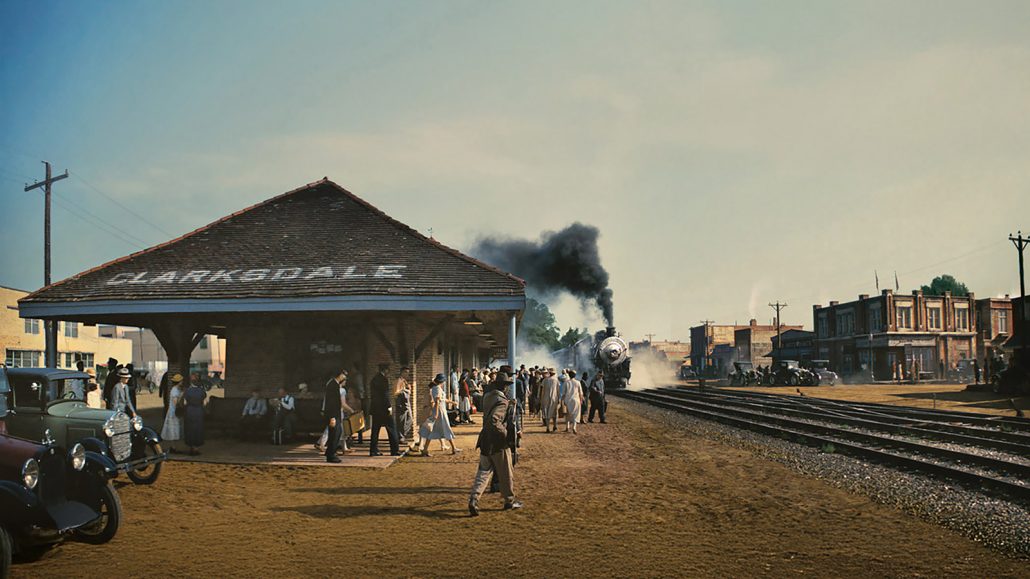
Photo courtesy of Warner Bros. Pictures
The Train Depot
Near the start of the film, the twins return to Clarksdale eager to recruit their old friends. To recruit their allies, one heads to The Train Depot, and the other goes into town. The train depot would be a challenge.
“We needed something that wasn’t on an active track. We all know how challenging working around trains can be after the Sarah Jones incident in Atlanta,” says Howard.
The team selected the Bogalusa Railroad Station which was built around 1907 in Washington Parish and was central to the development of the town—particularly it its role as a hub for transporting lumber to various national markets. The building, which is listed on the National Register of Historic Places, features unique design elements like semi-octagonal ticket windows and pine brackets.
“It was actually on a private track that ran to one of the largest paper mills here in the south,” says Howard.
Production would need it for a roughly 10-day period that included prep, shoot and strike.
The only issue was how to get the steam train there.
“We tried hard to get a real steam train, but it was just too difficult,” says Howard. “We met different reps for the active racks to route it to us, but you run a real risk with these old trains. One malfunction and you’ve now locked up active tracks. The other issue was there were certain tracks to get to our location that we were a little concerned about the weight of a steam engine train compared to modern day trains. I mean, these things are just massive. Double the weight of today’s engines.”
In the end, a VFX team scanned a steam engine from every angle over a two-day period and then added it in post with CGI.
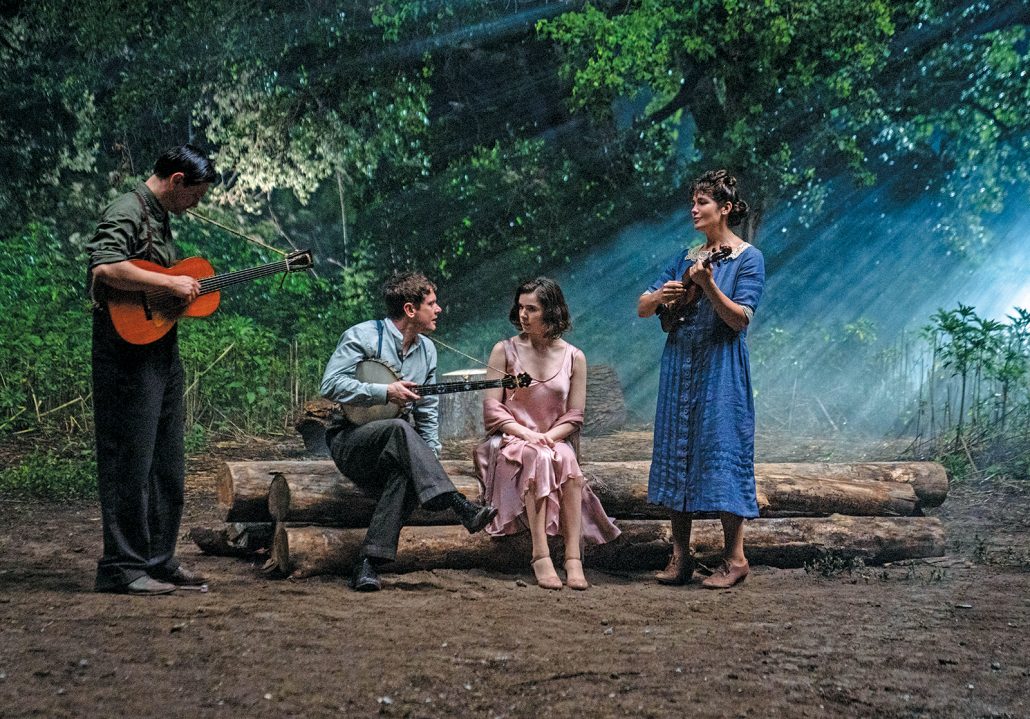
A vampire serenade. Photo courtesy of Warner Bros. Pictures
What’s Next for Howard and His Dream Team
For the moment, Howard is focused on two things: scouting for a number of new projects set to shoot in New Orleans and his work with the New Orleans Film Society (NOFS).
Howard served as President of the NOFS, a nonprofit, from 2022 to 2023 and currently serves as President Emeritus and sits on the Board.
At the moment, they’re making final preparations for the New Orleans Film Festival which runs from October 23-27 this year, and Howard hopes to bring Ryan Coogler down to the Big Easy for a special screening of Sinners with a Q&A to follow with a panel that would also include himself.
Howard is extremely proud of what he and his team brought to the project and is excited to bring festival audiences into that process. They had managed to lock all the locations halfway through the allotted 16 weeks of prep with a total staff of 12-16 location professions for a shoot scheduled for about 60 days that ended up just a week over schedule due to weather.
“I’ve worked with most of my crew for about 16 years now. Some a little less, some a little longer,” Howard says, “like key ALM Deven Schruff, ALMs Shiela O’Neill, Erin Burns and Andrea Babineaux/LMGI, location scout Jimmy Trotter, location coordinator Angel Penton, and all my location assistants … and, every project we do together, it becomes more and more obvious to me that we are the location ‘Dream Team,’ so I just want to say a big ‘thank you’ to my amazing crew. My success and recognition are theirs as well.”
SINNERS LOCATION DEPARTMENT
SLM Elston Howard/LMGI
KALM Deven Schruff
ALMs
Erin Burns
Shiela O’Neill
Jimmy Trotter
Andrea Babineaux/LMGI
Location Coordinator
Angel Penton
Location Assistants
Charles Jones
Noelle Trotter
Errol Robertson
Ryan Camel
Todd Muse